Rooted in Kyoto. Reimagined in London.
The Artof Attention.
ものに、もう一度、まなざしを。
In an age of endless creation, what is worth keeping?
Discover the Japanese art of kintsugi through intimate, hands-on workshops in London.
What is worthkeeping?
To look at things once more, with care.
In a world where almost anything can be created, replicated, and replaced in an instant, we ask a different question.
Images, words and designs can now be generated in seconds — produced, consumed and replaced with ever greater efficiency. Yet being able to acquire something new is not the same as being able to see the value in what is already in front of us.
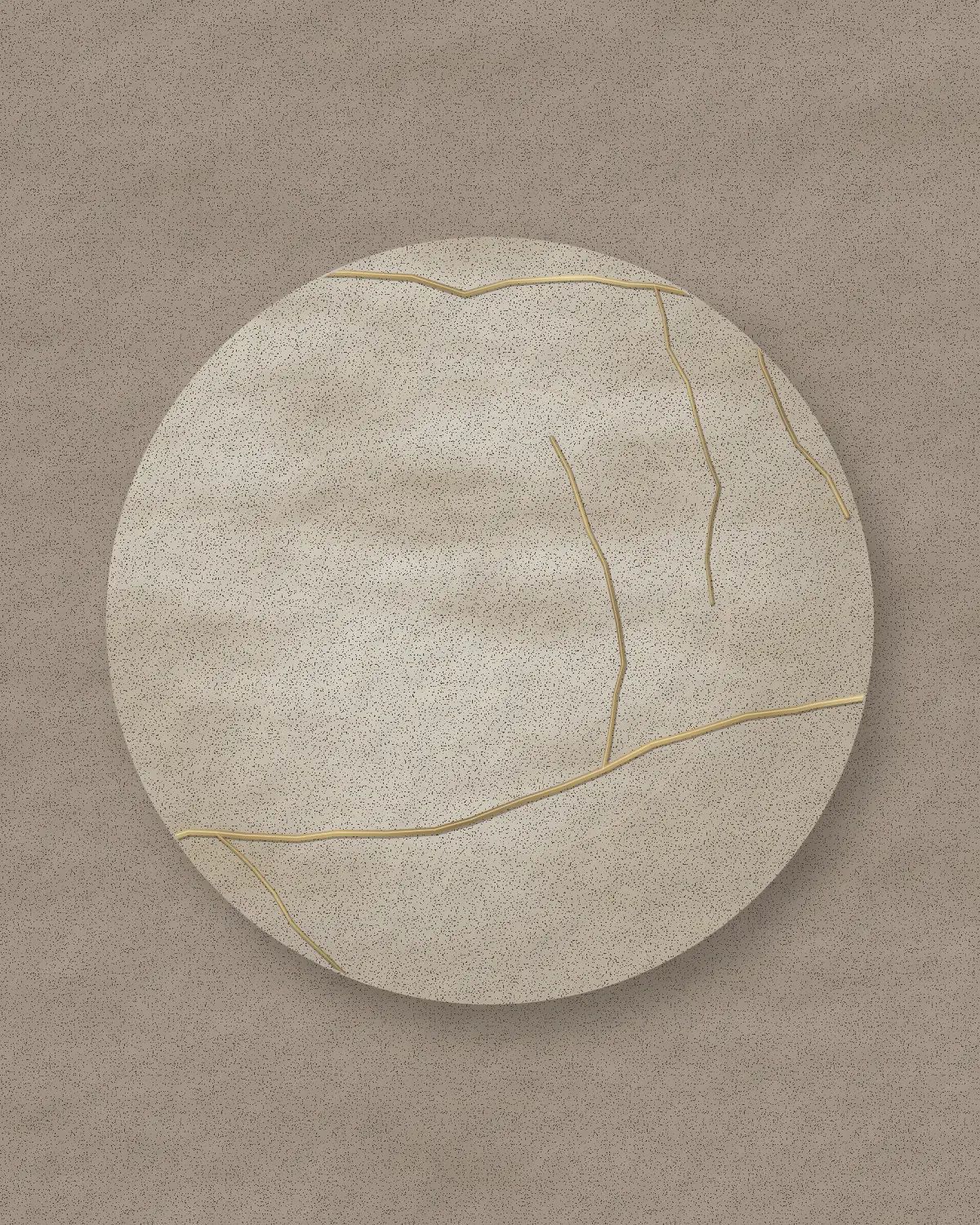
Kintsugi is the Japanese art of repairing broken ceramics, allowing their fractures to become part of their story. For us, repair is more than a technique. It is an act of attention.
Inspired by Japanese craftsmanship, Zen philosophy, and a reverence for the natural world, Kintsugi London invites us to slow down and reconsider our relationship with the objects around us.
Each fragment carries a history. Each imperfection reminds us that something has lived, changed, and endured.
Between Kyoto and London, tradition and contemporary life, we explore a quieter way of creating — one that values care over convenience, presence over speed, and continuity over replacement.
We do not reject AI or new technology. It is precisely because they are moving so quickly that we think it is worth asking, again, what handwork and repair can mean — what time, care, memory and presence are worth, when they cannot be measured by efficiency alone.
At the heart of it
Freedom from interchangeability.
We do not seek to erase what has been broken.
We make space for what it might become.
Six principles
Six ideas shape how we work — each one a way of looking more carefully.
- 01
Repair
修復
“Does repair mean returning to what was, or becoming something new?”
Kintsugi does not erase the past. It keeps the trace of damage and carries it forward, joining what happened to what comes next.
- 02
Attention
注意
Drawing on Zen and meditative practice, we turn towards what is in front of us: the weight of a vessel, its material, the line of a break, the feel of its surface. Away from screens and constant information, one act is given time. Repair becomes a way of practising attention.
- 03
Impermanence
無常
Everything changes — vessels, people, cities, cultures. We try to accept change and imperfection, and the marks they leave behind, without pretending that breakage or loss is beautiful in itself.
- 04
Reverence
敬意
We take inspiration from the Japanese idea of yaoyorozu no kami — literally “eight million kami”, an expression for countless sacred presences. It belongs to a rich religious and cultural tradition that deserves more than a slogan, so we take from it something modest: respect for earth, water and fire, for the maker’s hand and the owner’s memory. A vessel is not simply a commodity, but a meeting of many relationships and much time.
- 05
Transformation
変容
Repair is not simply restoration. When different materials, times and cultures meet, a new kind of beauty can emerge. Kyoto and London, Japan and Britain, tradition and the contemporary — not opposites, but a gradient in which boundaries blend.
- 06
Continuity
継承
Rather than exchanging the old for the new, we choose to continue our relationship with what we already have. To repair is to extend not only an object’s life, but the story it carries.
Goldenjoinery
Kintsugi — literally “golden joinery” — is a Japanese method of mending broken ceramics with lacquer, often finished with powdered gold. Rather than hiding the break, it lets the line of repair become part of the object.

Origins
Lacquer has been used in Japan since prehistoric times, and there is archaeological evidence of it being used to mend pottery long before kintsugi took its familiar golden form.
The practice as we recognise it today is generally associated with the culture of tea, in which repaired bowls came to be valued and admired. Popular stories about its exact origins are often repeated but hard to verify — so we share them as stories, not as history.
The idea of repair
Broken edges are joined, gaps and chips are filled, and the seam is smoothed and finished with metal. The repair does not try to disappear. It becomes a visible record of what the object has been through — and of the care it received.
Two ways of working
It is important to be clear about the difference between traditional kintsugi and the simplified, modern methods used in introductory workshops — including ours.
Traditional kintsugi
本漆金継ぎ- Materials
- Urushi — natural lacquer made from the sap of the lacquer tree — mixed with materials such as flour or clay powder, finished with gold or silver powder.
- Process
- Many thin layers, each cured slowly in warm, humid conditions. A single repair can take weeks or months.
- Skill
- Requires training and care. Uncured urushi can cause skin reactions.
- Result
- A durable repair in a centuries-old craft tradition.
Modern, simplified kintsugi
簡易金継ぎ- Materials
- Modern synthetic adhesives with metallic or mica powders.
- Process
- Can be completed within a single session.
- Skill
- Accessible to complete beginners.
- Result
- A decorative piece. Not food-safe.
Our beginner workshops will use this method.
BetweenKyotoand London
We do not think of Kyoto as the past and London as the present. Both cities are layered — old and new, local and borrowed, worn and remade. Our work lives where they overlap.
- Patina
- The seasons
- Craft lineages
- Care
- Repair
- Memory
- Antique markets
- Many cultures
- Reinterpretation
Kyoto
京都A city of workshops, where skills pass from hand to hand and objects are looked after across generations. Where the seasons are watched closely, and age and wear can be part of an object’s character. And a city of contemporary makers, galleries and students, constantly asking what craft can become.
London
ロンドンA city of many cultures, where objects arrive from everywhere and gather new stories. Of antique markets and museum collections, repair cafés and contemporary studios — a place where traditions, some of them centuries old, are continually reinterpreted.
A momentof repair
Our workshops will follow a quiet rhythm. It draws on meditative practice, but it is not a religious ceremony or a therapy — simply time set aside to pay attention.
I観る
Observe
Hold the piece. Notice its weight, its glaze, the edges of the break.
II想う
Reflect
Learn the ideas behind kintsugi, and consider what repair might mean.
III継ぐ
Repair
Join the fragments and shape the seam, slowly and by hand.
IV眺める
Contemplate
Let the repair settle. Look again at what has changed.
V携える
Carry Forward
Take your piece home, with a new chapter in its story.
ComingSoon
A collection of objects, repairs and quiet transformations.
Kyoto London
Rooted in Kyoto.Reimagined in London.
Kintsugi London lives between two cities and two cultures. Between Kyoto and London, tradition and contemporary life, we explore a quieter way of creating — one that values care over convenience, presence over speed, and continuity over replacement.
In a world where almost anything can be created, replicated, and replaced in an instant, we ask a different question: what is worth keeping?
Kintsugi does not erase the past. It keeps the trace of damage and carries it forward. Everything changes — vessels, people, cities, cultures — and we try to accept change and imperfection, and the marks they leave behind, without pretending that breakage or loss is beautiful in itself.
Inspired by Japanese craftsmanship, Zen philosophy, and a reverence for the natural world, Kintsugi London invites us to slow down and reconsider our relationship with the objects around us.
We do not seek to erase what has been broken.
We make space for what it might become.
Less replacing.More relating.
For enquiries, or to hear when workshops open, please write to us using the form below.
The form is provided by Google Forms. Please see our Privacy Policy for how your information is handled.
If the form does not load, open it in a new tab: Kintsugi London Contact Form (opens in a new tab)